


New research published in Nature shows an artificial intelligence tool created by physician-scientists at NewYork-Presbyterian and Columbia accurately identified structural heart disease from electrocardiogram (ECG) readings more frequently than cardiologists, including those who used AI to help interpret the data.
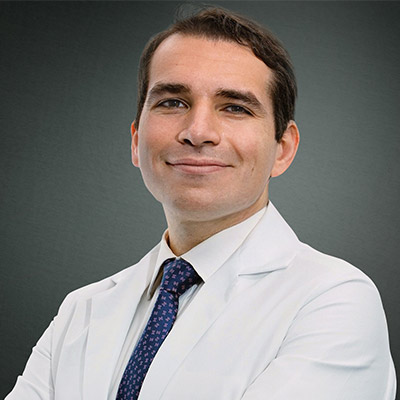
Called EchoNext, the screening tool was developed by a team of cardiologists and researchers led by Pierre Elias, M.D., medical director for artificial intelligence at NewYork-Presbyterian and assistant professor of medicine and biomedical informatics at Columbia. Structural heart disease affects millions of people worldwide, but the absence of a routine, affordable screening test means many people aren’t properly diagnosed until significant cardiac function has been lost.

Dr. Pierre Elias leads NewYork-Presbyterian’s efforts to use AI to detect heart disease earlier and more accurately.
EchoNext is a convolutional neural network model that analyzes ordinary ECG data to identify patients who should go on to have an echocardiogram to receive a more definitive diagnosis for structural heart problems such as valve disease, cardiomyopathy, pulmonary hypertension, and other diseases that require medication or surgical treatment.
“We have colonoscopies, we have mammograms, but we have no equivalents for most forms of heart disease,” says Dr. Elias. “EchoNext basically uses the cheaper test to figure out who needs the more expensive ultrasound. It detects diseases cardiologists can’t from an ECG. We think that ECG plus AI has the potential to create an entirely new screening paradigm.”
Using ECGs as a Predictive Tool
The ECG is the most commonly administered cardiac test but has typically only been used to detect abnormal heart rhythms, blocked coronary arteries, and prior heart attack. “We were all taught in medical school that you can’t detect structural heart disease from an electrocardiogram,” Elias says. For that, cardiologists rely on echocardiography.
EchoNext’s deep learning model, however, was trained on more than 1.2 million ECG-echocardiogram pairs from 230,000 patients collected over 14 years to help predict who is at high risk for structural heart problems using ECG traces and seven standard ECG values (age, sex, atrial rate, ventricular rate, PR interval, QRS duration, and corrected QT interval). In a validation study across four hospital systems, including several NewYork-Presbyterian campuses, the screening tool demonstrated high accuracy in identifying structural heart problems, including heart failure due to cardiomyopathy, valve disease, pulmonary hypertension, and severe thickening of the heart.
In a head-to-head comparison with 13 cardiologists on 3,200 ECG survey reviews — half of which were reviewed by a cardiologist with no AI assistance, and half of which were reviewed with AI assistance — EchoNext accurately identified 77% of structural heart problems, compared with 64% for cardiologists on non-AI-assisted reviews and 69% for AI-assisted ones.
Using our technology, we have the potential to turn the estimated 400 million ECGs that will be performed worldwide this year into 400 million chances to screen for structural heart disease.
— Dr. Pierre Elias
To further test the tool in a real-world clinical setting, the research team ran EchoNext over eight months in nearly 85,000 patients undergoing ECGs who had not previously had an echocardiogram. The AI tool identified 9% — more than 7,500 individuals — as high-risk for undiagnosed structural heart disease. The researchers then followed the patients for a year to see how many eventually received a diagnosis (the patients’ physicians were not aware of the EchoNext deployment so they were not influenced by its predictions).
Among the patients deemed high-risk by EchoNext, 55% went on to have their first echocardiogram. Of those, nearly three-quarters were diagnosed with structural heart disease — twice the rate of positivity when compared to all people who have their first echocardiogram without the benefit of AI.
At the same positivity rate, if all patients identified by EchoNext as high-risk had undergone an echocardiogram, about 2,000 additional patients may have been diagnosed with a potentially serious structural heart problem.
Dr. Elias and his team released a de-identified dataset as a resource for other health systems who want to improve screening for heart disease. The researchers have also launched a clinical trial to test EchoNext across eight emergency departments.
“You can’t treat the patient you don’t know about,” Dr. Elias says. “Using our technology, we may be able to turn the estimated 400 million ECGs that will be performed worldwide this year into 400 million chances to screen for structural heart disease and potentially deliver lifesaving treatment at the most opportune time.”
A version of this article was originally published on the Columbia newsroom.
Columbia University has submitted a patent application on the EchoNext ECG algorithm. Additional disclosures may be found in the paper.