


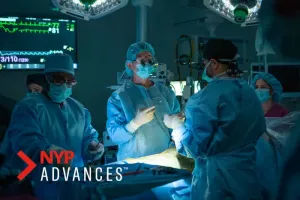

Liver Transplant
Liver transplantation is recommended for individuals who have serious liver dysfunction and would not be able to live without having the liver replaced. The most common reason for a liver transplant is cirrhosis (scarring of the liver). Other diseases that may lead to the need for liver transplantation include:
- Acute liver failure
- Biliary atresia
- Metabolic disease
- Liver cancer
- Hepatitis C
- Autoimmune hepatitis
- Liver damage from overdose of medications toxic to the liver
Liver transplantation is now a very safe and efficient treatment, with a 90 percent success rate and long-term survival above 75 percent for patients who would not have survived one year without it. NewYork-Presbyterian is one of the best hospitals in the world for liver transplantation, with a distinguished track record and a team of world-renowned leaders in the field.
Our Center for Liver Disease and Transplantation offers a seamless integration of medical, surgical, radiological, and support services. We are one of very few institutions to provide transplantation to patients who are co-infected with hepatitis C or HIV, and to patients with cancer of the bile ducts. To inquire with the Center for Liver Disease and Transplantation, please call 1-877-902-2232 or 646-962-54837.
Evaluation for Liver Transplantation
Candidates for liver transplantation undergo thorough medical and psychiatric evaluations. Medical tests may include:
- Blood tests
- Heart tests
- Lung evaluations
- Liver biopsy
- Chest x-ray to determine the health of the lungs
- Ultrasound to examine the liver, abdominal organs, and blood vessels
- CT scan of the liver
- MRI of the abdominal organs and blood vessels
- Endoscopy to assess ulcers or inflammation in the esophagus and stomach
- ERCP (endoscopic retrograde cholangiopancreatography) to view the bile ducts
- Liver angiogram
Our psychosocial team evaluates potential transplant candidates and their families and assists with psychosocial needs and social support services to help them cope with the many issues that arise during the transplantation process. Because the use of alcohol or illicit drugs renders patients ineligible for liver transplantation, random substance abuse screenings may be conducted.
Waiting for a Liver Transplant
The wait time for a liver transplant when the organ is coming from a deceased donor varies depending on the patient's severity of illness, blood type, and overall demand. Because the liver is able to regenerate, surgeons can divide a deceased donor organ and transplant each half into a different recipient (an approach called "split-liver" transplantation), allowing more patients to receive transplants.
Staying Healthy Before Transplantation
We encourage patients to stay as healthy as possible by managing stress, eating well, and exercising regularly so that they are ready for transplant surgery as soon as a donor organ becomes available. Patients will come to the Center for regular checkups during this waiting period.
Education and support groups are available to offer patients tools and support to manage their stress and cope with the challenges associated with their condition. A nutritionist provides dietary recommendations to help address any health problems associated with liver disease.
Staying in Touch
Patients on the waiting list for a liver from a deceased donor must be reachable at all times. Pagers or mobile phones are not mandatory, but they may be the best way to contact patients immediately when a donor liver becomes available. Transportation to the hospital and other details should be planned in advance.
Living Donor Liver Transplants
With living donor liver transplantation, a patient does not have to wait for a liver from a deceased donor if a matched living donor is available. During living donor liver transplantation, surgeons remove a portion of a healthy living person's liver for transplantation into a recipient. This procedure is made possible by the liver's unique ability to regenerate: the partial liver in both the donor and recipient grow and remodel to form complete, functioning organs.
The Living Donor Liver Transplant Program at NewYork-Presbyterian Hospital is one of the largest and most experienced living donor liver programs in North America, and the only one offering laparoscopic removal of donor liver tissue in select patients. Learn more about living donor liver transplantation.
Liver Transplant Surgery
Once a donor liver becomes available, the patient must come to the hospital immediately and undergo testing to ensure he or she is healthy enough to undergo transplantation. Deceased donor procedures must be done within 12 to 18 hours of the donor organ's procurement.
The transplant procedure typically takes between four and eight hours and is performed under general anesthesia. Learn more about how a liver transplant is performed.
Recovery After Liver Transplantation
Immediately following liver transplantation, patients are closely monitored in the intensive care unit (ICU). Most are able to return home in a week to 12 days. The majority of patients recover fully and return to their normal activities about three months after the surgery. Patients will return to the Center for frequent follow-up visits, blood work, and other testing.
Possible Liver Transplant Complications
Liver transplant recipients must take medications to help the new liver function smoothly and to prevent their bodies from rejecting the organ. Immunosuppressant medications (used to reduce the risk of organ rejection) have many side effects, including an increased risk of infection. Other risks after liver transplantation include:
- Bleeding at the anastomosis (the place where the blood vessels from the donor and the recipient liver were joined)
- Hepatic artery thrombosis (a clot in the liver artery)
- Bile duct leaks, which can cause infection
- Organ rejection
The liver transplantation team at NewYork-Presbyterian Hospital monitors patients closely after the surgery to support their recovery and to manage any complications that may occur.
Organ Rejection
Even with immunosuppression, the body's immune system can recognize the new liver as a foreign invader and develop immune cells, called lymphocytes, to attack it. Many patients experience some degree of organ rejection, especially within the first three to six months after transplantation. This is usually easily reversed with medications. Patients are closely monitored after transplant surgery so that warning signs of rejection can be detected early.
Infection
The immunosuppressant medications used to prevent organ rejection interfere with patients' natural immunity and render them more susceptible to infections. Patients may need to take antibacterial, antiviral, and antifungal medications to prevent harmful infections from developing.
Hepatitis Recurrence
Patients who had hepatitis B or C before transplantation can experience recurrence of the virus after surgery. Regular blood tests and liver biopsies will be done in order to screen for recurrence, which is treatable by medications if it occurs. NewYork-Presbyterian has special expertise caring for patients with hepatitis C who undergo liver transplantation.
To schedule an appointment, call the Center for Advanced Digestive Care at
To be evaluated for potential living donor donation, visit our Living Donor portal.